
← Nose News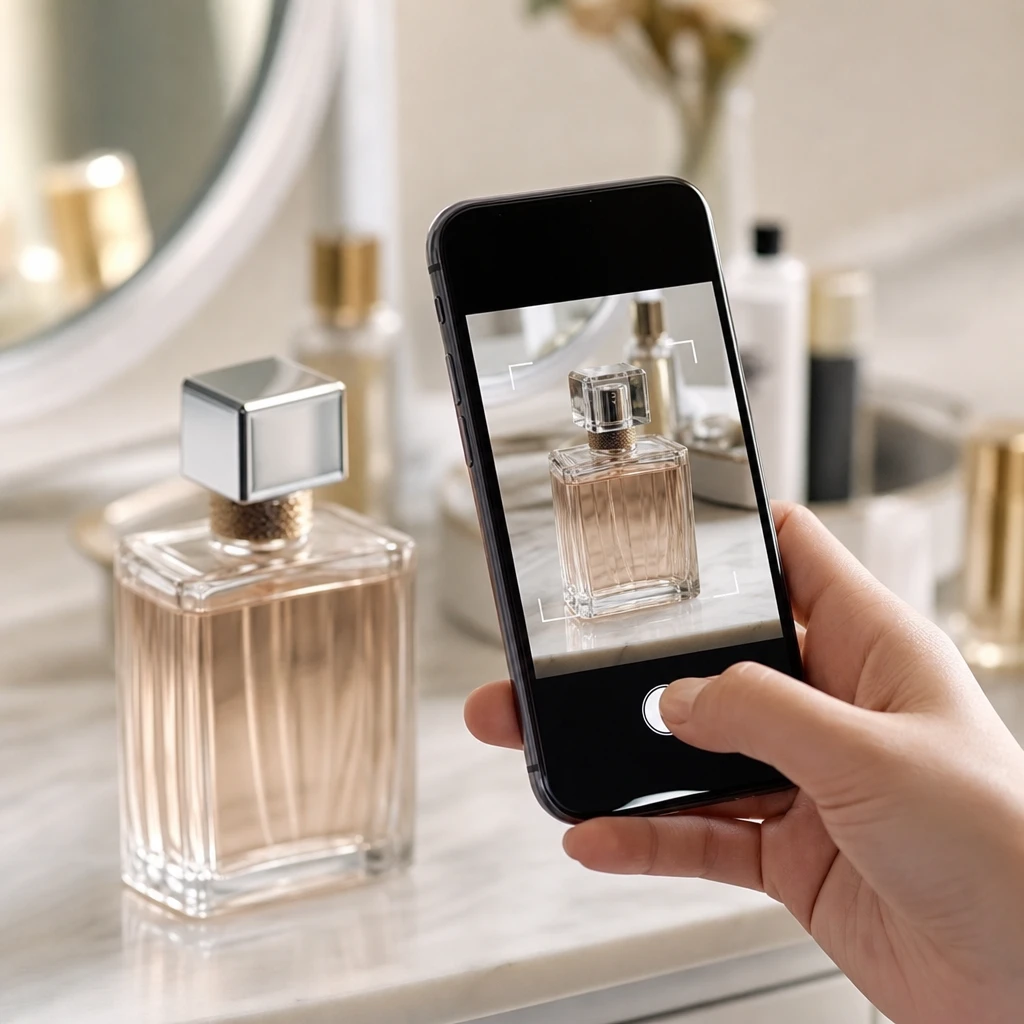
October 19, 2026
Perfume Scanner App Tips: How to Identify a Fragrance From a Bottle Photo (Without Getting the Wrong Match)
October 19, 2026
“Perfume scanner app” searches are usually urgent: there’s a bottle on the counter, a photo from a friend, or a tester strip that came home from a store—and the goal is simple: identify the fragrance quickly so it can be re-found, sampled, or purchased.
The catch is that perfume identification isn’t like scanning a cereal box barcode. Bottles get redesigned. Brands release multiple flankers under near-identical names. Limited editions reuse bottle shapes. And lighting—especially warm bathroom lighting or dim restaurant lighting—can erase the very details that separate a correct match from a close-but-wrong one.
At N.O.S.E. Notebook, we built our bottle scanning and identification flow around how people actually discover fragrance in the wild: quick photos, partial labels, and half-remembered names. The guide below covers the practical steps that consistently improve match accuracy, plus the common failure points that lead to wrong IDs.
A perfume bottle scan is only as good as the image. Before scanning (or before uploading into any fragrance identifier app), take 20 seconds to capture the details that identification systems rely on.
Aim for two photos, not one:
That second image—the base—solves a surprising number of “it keeps matching the wrong one” cases.
A few quick rules that make a big difference:
If the bottle is frosted or mirrored and the label is hard to see, place a dark towel behind it. That simple contrast trick often makes faint lettering pop.
Low-light identification is the reality for a lot of fragrance discovery: someone pulls a bottle out at dinner, a hotel vanity is dim, or it’s simply darker earlier in the day.
Newer phone cameras are better at low-light photography than they used to be, but the same principle holds: stability + readable text beats “brighter at any cost.” Over-processed night mode can smear fine lettering.
Practical moves:
If a scan is repeatedly failing, it usually isn’t the app—it’s that the label text is unreadable in the source photo.
Most wrong matches happen because the scan identifies the “main line” fragrance, but the bottle is actually a flanker (a related release that shares the brand DNA and name structure). Limited editions and seasonal releases can create the same confusion.
When you scan perfume bottles, slow down and check these elements:
If a scan result feels “almost right,” it often is—just not the precise version.
People frequently search “EDP vs EDT identify” because the concentration changes how a scent wears—and sometimes the price.
To identify concentration from the bottle:
Important nuance: the same fragrance name can exist in both EDT and EDP with very similar packaging. A perfume label scanner may read the name correctly while missing the concentration—so that bottom-of-bottle photo is the difference between a correct ID and a frustrating mismatch.
Some bottles are intentionally minimal, and some labels have simply worn off. In those cases, identification becomes a pattern-matching problem.
Here’s what to capture for the best chance of a correct match:
Even a partial clue—brand initials, “Paris,” “Made in…,” or a volume line—can narrow results dramatically.
Even with a good photo, it’s worth confirming the match before adding it to a wishlist or buying a replacement. A fast verification routine prevents the most common purchasing mistake: ordering the wrong flanker or the wrong concentration.
A reliable 30-second check:
If one of these doesn’t match, treat the scan as “close match” rather than “confirmed.”
Identification is the urgent need—but cataloging is what makes the scan valuable later.
A fragrance vault approach (like we use at N.O.S.E. Notebook) is simple: once a bottle is identified, it becomes part of a personal library. Over time, that library makes recommendations smarter and decisions easier—especially when someone owns multiple versions from the same house.
A solid vault entry usually includes:
That last piece—how it actually wore—matters more than any marketing description.
Sometimes the answer genuinely isn’t in the photo. If the bottle is decanted, the label is gone, or the image is too blurred, scanning hits a ceiling.
In those cases, the best next step is to collect “supporting evidence”:
The goal isn’t to write a poetic review—it’s to provide a couple of concrete cues that narrow the field.
A perfume bottle scan can be surprisingly accurate when the photo captures what matters: readable name text, a glare-free label, and the bottom sticker that confirms concentration and edition clues. The biggest errors come from flankers and low-light blur—two problems that are easy to avoid with a quick two-photo habit.
N.O.S.E. Notebook is built for fragrance discovery in real life: scan and identify what’s in front of you, then save it into a personal fragrance vault so it’s easy to revisit, compare, and get smarter recommendations over time. When you’re ready to put those finds to work—whether that means tracking a collection or discovering what to try next—reach out to the N.O.S.E. Notebook team and explore the app experience.
Find your next scent
Browse scent profiles, notes, and houses — or let the Scent Finder match you to a fragrance in four questions.
October 16, 2026
Fall/Winter 2026 fragrance is all about comfort with personality: soft “your skin but better” musks, edible-leaning gourmands with a savory twist, and bolder atmospherics that still feel wearable. Here’s what’s trending—and how to translate the trend into a scent that actually fits you.
October 14, 2026
Perfume finder apps have leveled up fast: smarter AI, better bottle scans, and collection “vaults” that help you remember what you own (and what you actually love). Here’s what to look for in 2026—and how to choose the right app for your scent journey.
October 12, 2026
Finding a signature scent doesn’t have to mean buying a dozen discovery sets and hoping something clicks. Here’s a modern, realistic process—powered by a clear scent profile and smarter recommendations.